
17 Jul 2026
FUE vs FUT Hair Transplant: Which Method Is Better?
If you are researching hair restoration, the choice between FUE vs FUT hair transplant is likely the first real decision you’ll face, and it’s one that affects everything from how you look immediately after surgery to how your donor area heals over the coming months. Both are established, evidence-backed hair transplant methods, but they work differently, suit different patients, and produce different long-term results. The NHS confirms that a hair transplant involves moving hair from one area to another and is typically performed under local anaesthetic, but the technique used determines the experience on both sides of that process.
At Dr. Vivekanand Hair & Vitiligo Clinic, method selection is always guided by a thorough assessment of each patient’s scalp, donor density, and hair loss pattern.
What Is FUE Hair Transplant?
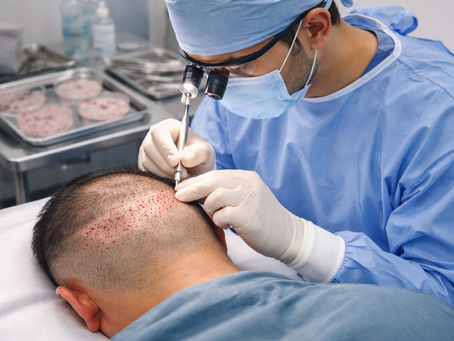
FUE hair transplant — follicular unit extraction, involves harvesting individual hair follicles one by one from the donor area at the back of the scalp using a precision micro-punch tool, then placing them into the thinning or bald zone. There is no linear incision involved, no stitches, and the tiny extraction points heal naturally within a few days, leaving no visible strip scar. FUE hair transplant in Bangalore at Dr. Vivekanand Hair & Vitiligo Clinic is performed with motorized and manual punch tools calibrated to each patient’s follicle diameter, which directly influences graft quality and survival.
- No linear scar — only small, circular healing points that are invisible once hair grows back
- Suited to patients who prefer keeping their hair short after surgery
- Slightly longer procedure time per session compared to strip harvesting
- Recovery is faster with less post-operative discomfort, and most patients return to normal activity within a week
What Is FUT Hair Transplant?
FUT hair transplant — follicular unit transplantation — involves surgically removing a narrow strip of scalp from the donor area, dissecting it under a microscope into individual grafts, and transplanting those grafts into the recipient zone. Because the entire strip is harvested at once, a larger number of grafts can be obtained in a single session, which makes FUT particularly valuable for patients with extensive hair loss requiring high graft volume. The trade-off is a linear scar at the donor site — one that is permanent, though it remains hidden under normal hair length.
- Higher graft yield per session — often 3,000–4,500 grafts compared to FUE’s typical 2,000–3,000 in one sitting
- Follicle transection rates are lower during harvesting, which can support a higher graft survival rate
- The linear scar at the back of the scalp limits the ability to wear hair very short post-surgery
- Healing takes longer due to the strip excision, and stitches or staples are removed around 10–14 days post-procedure
FUE vs FUT Hair Transplant: A Direct Comparison
Choosing between the two hair transplant methods is a clinical decision that depends on the degree of hair loss, donor area characteristics, lifestyle, and what the patient’s scalp can realistically deliver. MedlinePlus, part of the US National Library of Medicine, notes that androgenetic alopecia affects an estimated 50 million men and 30 million women in the United States alone — illustrating both the scale of the condition and the range of loss severity that surgeons regularly work with. Neither FUE nor FUT is categorically superior across all patients; the better technique is the one that matches the individual’s profile.
| Factor | FUE Hair transplant | FUT Hair transplant |
| Scarring | Tiny circular dots, not visible | Linear scar- hidden under hair |
| Grafts per session | 2,000- 3.000 typically | 3,000 – 4.500 possible |
| Graft survival rate | Very high with skilled technique | Consistently high-lower transection risk |
| Hair transplant recovery | Faster 5-7 days | Longer 10-14 days |
| Best suited for | Mild -moderate loss, short hair wearers | Extensive loss, high graft volume needed |
| Procedure time | Longer per graft | Faster overall harvest |
Hair Transplant Recovery: What to Expect From Each Method
Hair transplant recovery timelines differ meaningfully between the two techniques, and understanding this helps patients plan appropriately around work, social commitments, and sun exposure. The NHS advises that patients undergoing hair restoration surgery should allow adequate healing time and avoid strenuous activity during the early recovery phase — this applies to both techniques, though FUE patients typically return to normal activity sooner. At Dr. Vivekanand Hair & Vitiligo Clinic, every patient receives a detailed post-operative protocol covering washing instructions, sleeping position, and activity restrictions specific to the technique used.
- FUE patients typically see healing of donor sites within 5–7 days; transplanted hair sheds over weeks 2–4 before new growth begins
- FUT patients need suture removal around day 10–14, with the donor site requiring careful management to minimise hair transplant scars
- New hair growth for both methods typically becomes visible from months 3–4, with full density appearing around 12–15 months
- Best hair transplant technique outcomes depend as much on post-operative care as on the procedure itself
Conclusion
There is no single answer to the FUE vs FUT hair transplant debate — only the right answer for your specific scalp, donor density, and hair loss stage. At Dr. Vivekanand Hair & Vitiligo Clinic, every patient’s hair restoration surgery plan starts with a thorough scalp analysis before any technique is recommended. If you are considering a hair transplant clinic in Bangalore that combines surgical precision with honest, diagnosis-led planning, the first step is a consultation.
Book your assessment at Dr. Vivekanand Hair & Vitiligo Clinic today and get a clear picture of which method is right for your scalp — and what realistic results look like for your specific pattern of loss.
Frequently Asked Questions
- What is the main difference between FUE vs FUT hair transplant?
FUE hair transplant extracts individual follicles one at a time without a linear incision, leaving no strip scar. FUT hair transplant removes a strip of scalp to harvest a larger number of grafts in one session, leaving a linear donor scar. The choice between hair transplant methods depends on graft requirement, scalp laxity, and how short the patient intends to keep their hair after surgery. - Which hair transplant method gives a better graft survival rate?
Both techniques can achieve high graft survival rates when performed by an experienced surgeon. FUT generally carries a lower risk of follicle transection during harvesting since grafts are dissected under magnification from an excised strip. FUE transection risk has reduced significantly with modern punch technology and surgical skill. The surgeon’s experience with the chosen method matters more than the method itself. - Does FUE hair transplant leave scars?
FUE hair transplant leaves small, round healing points in the donor area rather than a linear scar. These are typically undetectable once hair regrows to even a short length. Hair transplant scars from FUT appear as a single horizontal line at the back of the scalp, which remains hidden under standard hair length but becomes visible with very short cuts. - How long does hair transplant recovery take for each method?
Hair transplant recovery after FUE typically allows return to light activity within 5–7 days. FUT recovery takes longer due to suture removal at 10–14 days and greater donor site healing time. For both hair transplant methods, the transplanted hair sheds in the first few weeks before regrowing — this is a normal part of the process and not a sign of failure. - Where can I get FUE hair transplant in Bangalore?
Dr. Vivekanand Hair & Vitiligo Clinic offers FUE hair transplant in Bangalore with a detailed pre-surgical scalp analysis and individually tailored graft planning. As a dedicated hair transplant clinic in Bangalore focused on both surgical precision and long-term aesthetic outcomes, every procedure is structured around your hair loss pattern, donor area capacity, and recovery expectations. Hair restoration surgery at the clinic covers both FUE and FUT, with the method selected based on clinical assessment rather than preference alone.